Debts – The Nitty Gritty
How is it is relevant to us today?
 Why did Allah Almighty reveal the longest ayah of the Qur'an about debt? Simply, money concerns us all. All our dealings have financial repercussions.
Ayat ul dain (2:282), the longest ayah of the longest surah of the Qur'an relates to debts and contracts.
‘Dain’ means debt, difficulty or deferred payment for a sale.
The Big society – making lending practical and bring back trust
Money is no joke. People cut off family ties, kill each other and fight wars over it. So it is important to regulate and legislate people’s financial rights and protect their wealth. Hence Allah Almighty has given us an ‘ayatulahkam’ (verse of ruling) for these matters. Allah Almighty is promoting lending rather than hoarding, but knows our psychology and that our fear when lending is that we will not get our money back. So He is guiding us away from an atmosphere of mistrust, grudges and exploitation in our transactions towards a new framework of giving, and He has gone into great detail in how to apply this practically. This covers lending as well as deferred sales, as there are many situations where advance payment is made such as in business, buying a car, off plan property, or ordering goods. Allah Almighty is creating a new business model in which all parties are protected and feel secure.‘O you who believe, when you transact a debt payable at a specified time, put it in writing, and let a scribe write it between you with fairness. A scribe should not refuse to write as Allah has educated him. He, therefore, should write. The one who owes something should get it written, but he must fear Allah, his Lord, and he should not omit anything from it. If the one who owes is feeble-minded or weak or cannot dictate himself, then his guardian should dictate with fairness. Have two witnesses from among your men, and if two men are not there, then one man and two women from those witnesses whom you like, so that if one of the two women errs, the other woman may remind her. The witnesses should not refuse when summoned. And do not be weary of writing it down, along with its due date, no matter whether the debt is small or large. That is more equitable in Allah’s sight, and more supportive as evidence, and more likely to make you free of doubt. However, if it is a spot transaction you are effecting between yourselves, there is no sin on you, should you not write it. Have witnesses when you transact a sale. Neither a scribe should be made to suffer, nor a witness. If you do (something harmful to them), it is certainly a sin on your part, and fear Allah. Allah educates you, and Allah is All-Knowing in respect of everything.’ (2:282)
The importance of documenting debt
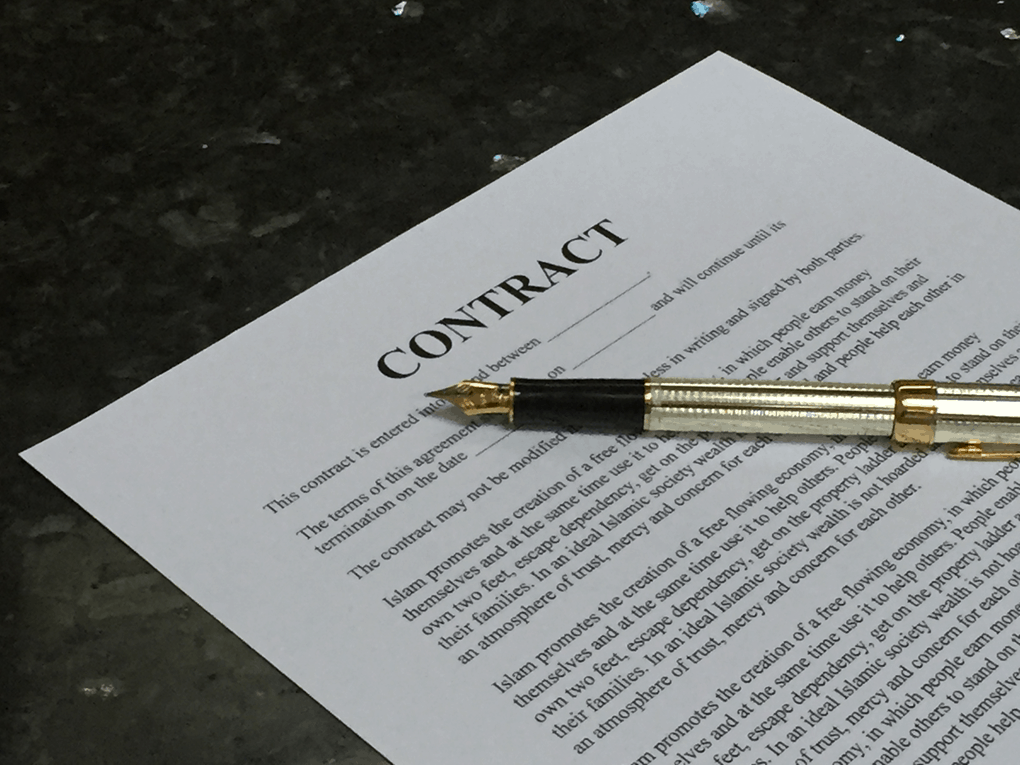
The first step is documenting debt – having a clear record of the transaction so there is no ambiguity or misunderstanding. It is not a reflection on whether one is trustworthy or not, but diminishes the possibility of dispute later. It should be common practice, and no one should feel insulted or intimidated as it protects both parties. We don’t know what could happen in the future and over time matters can become neglected and forgotten. In the event that the lender or debtor dies, there is clear proof of who owed what to whom. The shariah has five aims (maqasidul shariah), which are the preservation of our basic rights. These are the right to faith, life, wealth, honour/lineage and intellect. If any of these rights are violated Allah Almighty has specified the punishments that should be imposed.Are we sinful if we do not write a debt down in a contract?
It is not compulsory but highly recommended that debt should be noted down. This means we are not sinful if we don’t do it. However, even though it is not an obligation, we should take this guidance into our practical life. This ayah is talking to us and we are being personally entrusted with carrying out Allah Almighty’s command. He specifically calls on as ‘ya ayyuhal amanu’ (oh you who believe) and our reply should be ‘labaik Allah, I am at your service,’ just as Ibrahim (peace be on him)When his Lord said to him: “Submit!” He said, “I have already submitted myself to the Lord of all the worlds.” (2:131)